
Last Updated on February 9, 2026
A road trip from Paris to Normandy, an easy and wonderful getaway…
Estimated reading time: 10 minutes
By Jim Ferri
A trip from Paris to Normandy to see the D-Day beaches…it’s a trip I’ve wanted to take for years. Finally, the last time we were in France, my wife and I decided to finally make the plunge.
It was mid-May, a perfect time to visit Normandy. There were fewer tourists, the weather was delightful, and prices were down a bit. (Another good time to visit is in autumn).
Best of all, it was an exciting and easy road trip to put together. If you’re in Paris and are looking for an exciting weekend trip, this may be it. In fact, even if you’re heading over just for a long weekend, this is a great trip. (And yes, it is possible to make long weekend trips to Europe from North America.)
It’s an easy trip since the roads from Paris to Normandy are modern, well kept and easy to drive on.
Table of contents
From Paris to Normandy With a Little Planning
Since we wanted to make the best use of our time, we flew to Charlotte, NC, to connect with a 4:45pm American Airlines flight to Paris’ Charles de Gaulle Airport. That put us in CDG at 7:00am, a bit early but it also gave us an extra day. It is something to consider in planning this road trip. In addition, the early arrival also allowed us to avoid the crowds, breeze through customs and immigration, and be at the car-rental counter within minutes. There, the rental paperwork was completed quickly and we were soon on our way.
Note that if you’re renting a car, it’s best to get one with GPS navigation since you’ll be traveling all over the countryside. But, most importantly, if you don’t speak French, ensure that the rental folks set the car’s GPS for your native language. Not speaking French, we had a bit of a problem the first day trying to load our destinations on a French-speaking GPS.
Another suggestion: if you’re one who feels a bit unkempt after an overnight flight, you can get a day room at a local hotel for a shower or quick nap before you set out. Most hotels are in the same area adjacent to the airport.
Driving from Paris to Normandy: Make a Stop at Monet’s House in Giverny
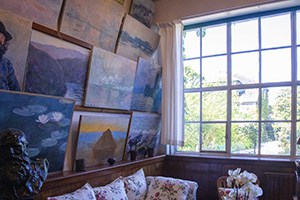
While driving from Paris to Normandy, stop in Giverny and visit the house and gardens of French Impressionist Claude Monet. Monet’s paintings, especially of the water lilies in his Giverny garden, now grace the walls of museums around the world.
Monet’s house is relatively easy to reach. Before you depart CDG set your GPS to travel to Rouen via route A13. Take it to the Vernon exit – about one hour from Paris – and then follow the signs to Giverny, about 15 minutes further. In addition to Monet’s home, you may also want to spend some time in the village of Giverny.
Enjoy Giverny and Monet’s House and Garden on a guided tour (no cancellation fee) from Paris
Unfortunately, however, I missed the exit, which resulted in the GPS sending us off across the French countryside for a half hour. Fortuitously, however, that also allowed us to see a swath of Normandy that we would never have seen. Unfortunately, many more swaths were yet to come.
Our countryside tour took us by numerous apple orchards which, come autumn, would surrender their fruit for Normandy’s legendary Calvados. All along the way were also an abundance of cows working hard to provide the substance for Normandy’s famous Camembert, Livarot, and Pont 1’Eveque cheeses.
We still, however, arrived at Monet’s house ahead of the tour buses from Paris, and relaxed in a little neighborhood café. When the entrance opened we found that a small but comfortable-size crowd had already gathered. Once inside, the beauty of both the mansion’s large garden and water lily ponds astounded everyone. For those of us who had seen Monet’s water-lily masterpieces in museums, it was an incredible experience, enhanced by the house itself, which was fascinating and beautiful.
Frustrated in Rouen
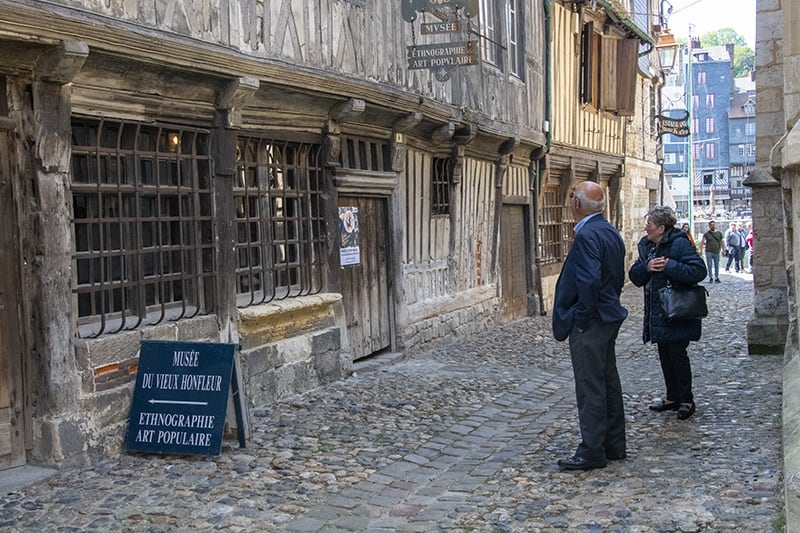
When planning our Paris to Normandy adventure, we had decided to overnight in Honfleur, a town at the mouth of the Seine. First, however, we would stop in the medieval city of Rouen.
Historians remember Rouen as being important in the endless wars between the English and French centuries ago. The rest of us remember it as the place where Joan of Arc was burned at the stake.
Given our luck with the French GPS, it should have come as no surprise that we got totally lost trying to find the spot that vaulted Joan into history. After a frustrating hour, we left and had as much trouble getting out the city as we did coming into it.
Honfleur, however, was only an hour away.
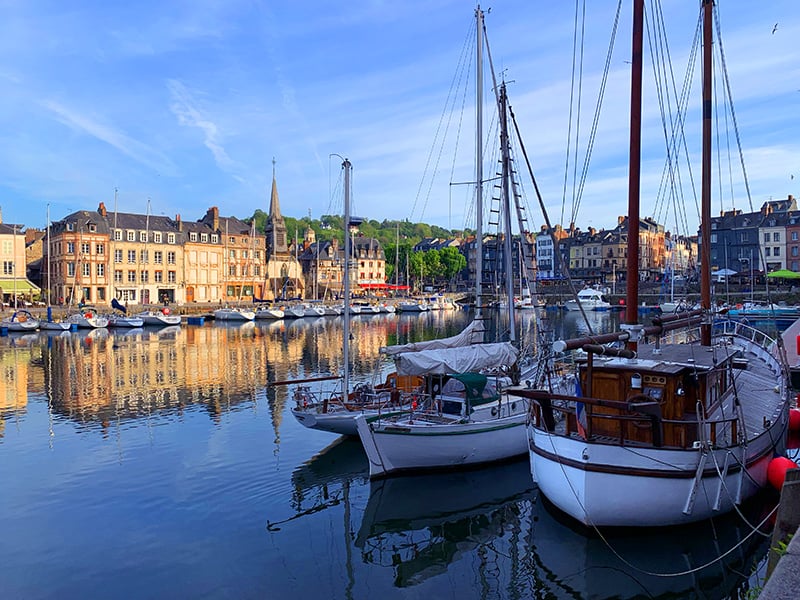
From Paris to Normandy: Overnight in Beautiful Honfleur
Honfleur is a beautiful port town that has inspired many French artists, including Monet. It’s a good place where the people are genuinely welcoming, and do not focus solely on collecting tourist Euros. Even better, the town has many wonderful restaurants, serving seafood considered some of the best in France. There’s also a picturesque old-fashioned carousel alongside the harbor.
Enjoy Beautiful Honfleur on these free cancellation tours from Viator/TripAdvisor. We love Viator and the experiences it’s provided us!
We arrived in Honfleur almost in time for a late lunch at the L’Absinthe Hôtel. It’s an older property right on the harbor (€170 per night double). When we asked the manager about a restaurant for lunch, he explained it was almost time when many restaurants stop serving the mid-day meal. But he then told us to wait as he rushed across the street to ask if they might accommodate us.
It turned out to be a good place with great food and wines. My wife Marjorie’s bouillabaisse was excellent, my fish top-rate (that’s coming from a carnivore), and the service also top-notch. It was a resounding Paris to Normandy memory.
That evening we decided to have our gustatory experience at the Le Bistro du Port next to the hotel. Again, it was another quite satisfying meal – moules, entrecote, salad, crème brulee, ice cream, and five glasses of good wine between us for €113. We also really enjoyed the hotel’s breakfast the next morning.
A Detour to Bayeux
Honfleur is an comfortable place to spend two nights while exploring the D-Day Beaches. It is, however, at the northern end of the beaches, meaning in the evening you must double back to return to your hotel.
Another option is to stay in Bayeux, centrally located a bit inland from all the beaches, and only a half-hour drive from Omaha beach. It was the first city to be liberated in the Battle of Normandy.
We actually decided to visit Bayeux on a whim. As we were racing across the back roads of the Norman countryside, we decided to make a pilgrimage to the Bayeux Tapestry Museum to view the famous Bayeux Tapestry. It’s a 230-foot-long masterpiece (the longest in the world) depicting the Norman conquest of England. It’s a fascinating work of art but, unfortunately, the Museum is currently closed for renovation work until October 2027.
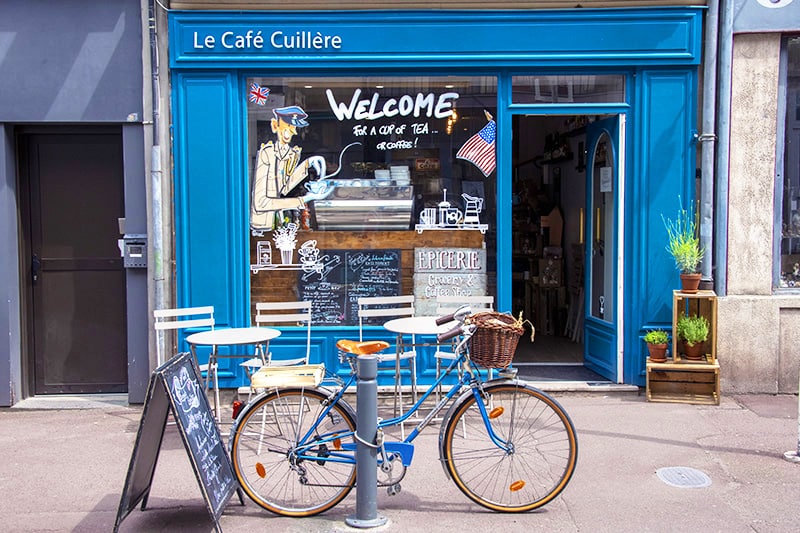
Somehow, we had a hard time finding the museum, even though we passed it 3-4 times as we futilely attempted to find a parking space somewhere in town. That foray, however, allowed us to see so many of the little cafés and shops that had their windows painted, thanking British, American, and Canadian veterans for their bravery on those memorable days in Normandy in June 1944.
If you’re not on a tour here, a car is a must since the beaches are so spread out. But instead of driving the entire trip, you could also take the train from Paris and rent a car to see the beaches.
The D- Day Beaches
The primary focus of our Paris to Normandy journey was the famous D-Day beaches. This long, somber stretch of the Normandy coastline has many little towns and villages where Gallic charm continues to thrive. Here people still greatly appreciate the sacrifices made by their ancestor’s liberators so many years ago.
It’s easy to find the beaches since they are still sign-posted with their invasion code names – Sword, Juno, Gold, Omaha, Utah and Pointe du Hoc – all over the area.
Tour the D-Day Beaches from Paris or Bayeaux on a tour with free cancellation
The Americans came ashore at Omaha Beach and Utah Beach; Canadians and Free French at Juno Beach; the Brits and other members of the Commonwealth at Sword and Gold. Many paratroopers, dropped inland behind German lines, now lie at rest in Normandy.
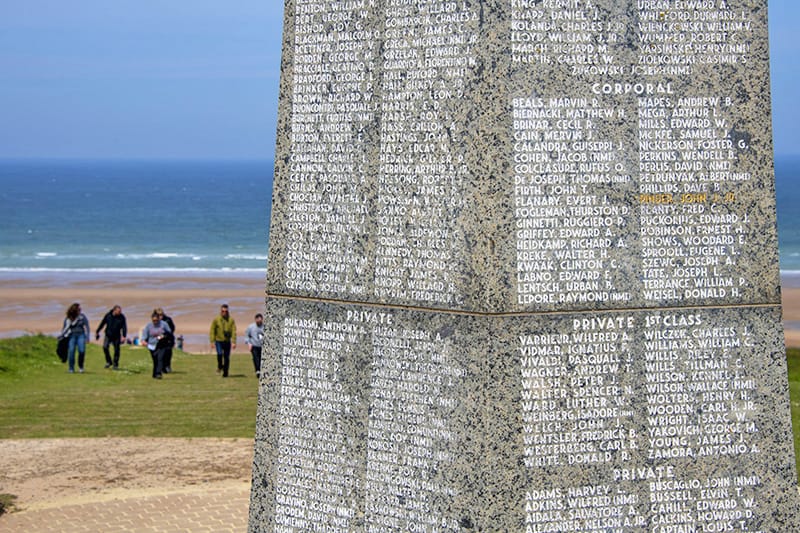
Today the Normandy American Cemetery and Memorial (9,388 burials) in Colleville-sur-Mer is the most famous among Americans. You’ll find other nationalities buried near the beaches where their armies came ashore. Also scattered about Normandy are the many cemeteries with the remains of the military from the U.S., Canada, England, Free French, the Commonwealth, Poland, Germany, and other nationalities.
The Two Execeptions
As you might suspect, the Normandy beaches now bear little, if any, resemblance to how they looked in 1944. But there are two exceptions.
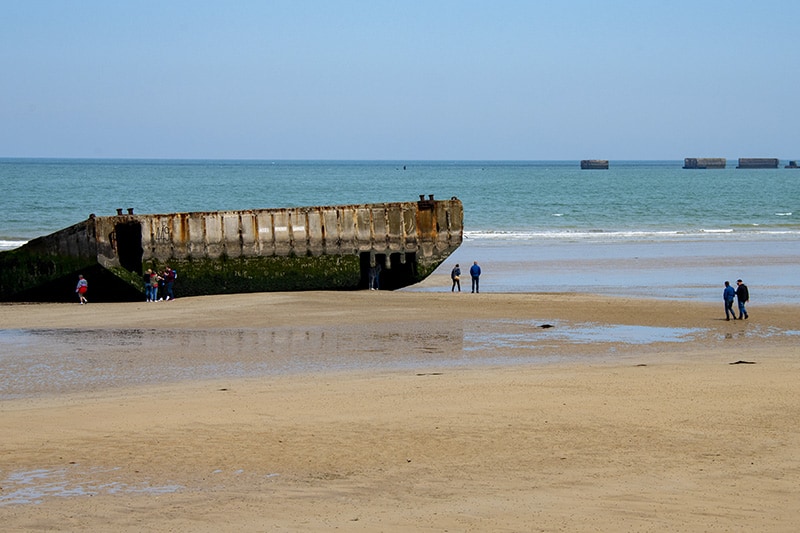
On the beach of Arromanches-les-Bains, as well in the channel in front of it, you still see the Mulberry Harbors that were built for the invasion. Mulberry Harbors were the massive floating piers that facilitated the movement of tanks, trucks, and supplies from ship to shore. On the beach today they look like something from Star Wars. You can see historical photographs of them here.
At Pointe du Hoc, where commandos assaulted German artillery that likely would have stopped the assault, the ground has been left as it was after the attack, pockmarked with the massive craters that resulted from aerial and naval bombardment.
A visit to Normandy – especially to the D-Day beaches – is a trip many long remember. And it’s interesting enough to be taken several times.
We finished our Paris to Normandy road trip staying overnight on beautiful Mont St. Michel. It was a mistake, one I hope you won’t replicate.
You may also enjoy: Best Places in Paris / An Awesome Brussels Food-Filled Weekend / Things to Do in Luxembourg
The next time you visit the area be sure to visit the Peace Museum in Caen. We spent hours there. Shows all the history leading up to the war as well as everything that resulted from the war. ie League of Nations, Marshall Plan, etc
Hi Dick,
I would have liked to have gotten to Caen but time was so short since we were also going to the Loire Valley.
You mean the Caen Memorial Museum, Dick? Yes, I agree it’s very good on the ‘big picture’ – how WW2 started, how it developed and how it ended.
Then from Caen, there are a squillion good D-Day museums. Highlights among them?
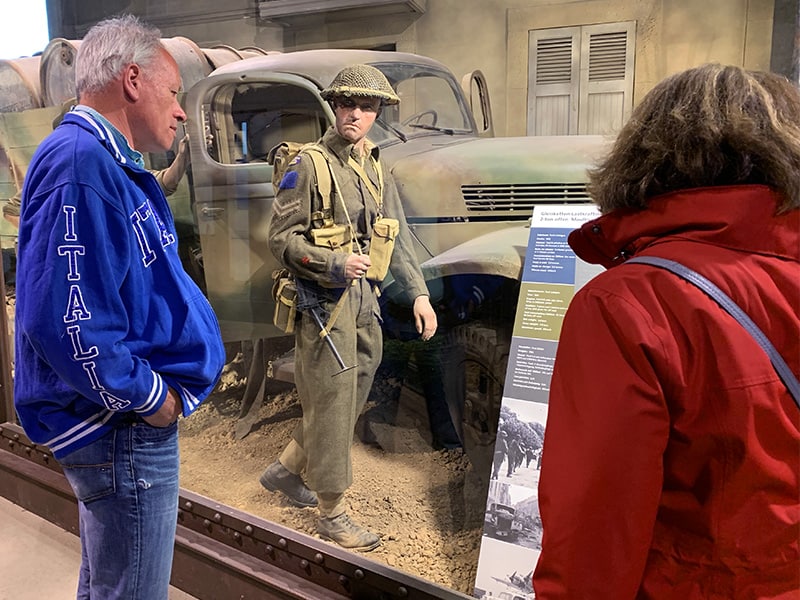
Well, Jim, you picked out the D-Day Landings Museum at Arromanches and the Overlord Museum at Omaha Beach (did you get to see the US Cemetery next door? Moving isn’t it?). For key museums, I’d add the Airborne Museum at Sainte-Mere-Eglise, the Utah Beach D-Day Museum, the Juno Beach Museum and the Pegasus Bridge Memorial Museum (just outside Caen)
Hi Alastair,
Yes, we visited the cemetery, which is a very moving experience. I wish we had time to visit all of the other museums — especially those that you mentioned. Our problem was time, however. I would enjoy going back some day to visit them all.