
Last Updated on December 30, 2025
The best cities of Eastern Europe to visit for a day… yes, a day...
Estimated reading time: 10 minutes
By Jim Ferri
Before the 20th century, many countries in Eastern Europe were not individual nations but parts of vast European empires.
Their rulers built opulent castles, soaring cathedrals, and other massive monuments in grandiose displays of power, prestige, and supremacy. And it all survives in these impressive capital cities today. These five best cities of Eastern Europe that follow are fascinating places, each well worth a visit for several days.
Unfortunately, that’s not always possible for many travelers. For those with limited time to explore this fascinating area of Europe, you should still go. Even if you can only spend 24 hours in each city, you’ll still find it worthwhile. Here are some suggestions.
Table of contents
- Best City of Eastern Europe for Sightseeing: Prague
- Most Popular Hotels in Prague
- Best City of Eastern Europe for Old-World Style: Budapest
- Most Popular Hotels in Budapest
- Best City of Eastern Europe for Old-World Architecture: Ljubljana
- Most Popular Hotels in Ljubljana
- Best City of Eastern Europe for Inexpensive 5-Star Hotels: Bucharest
- Most Popular Hotels in Bucharest
- Best City of Eastern Europe for Clubs and Coffee Houses: Belgrade
- Most Popular Hotels in Belgrade
Best City of Eastern Europe for Sightseeing: Prague
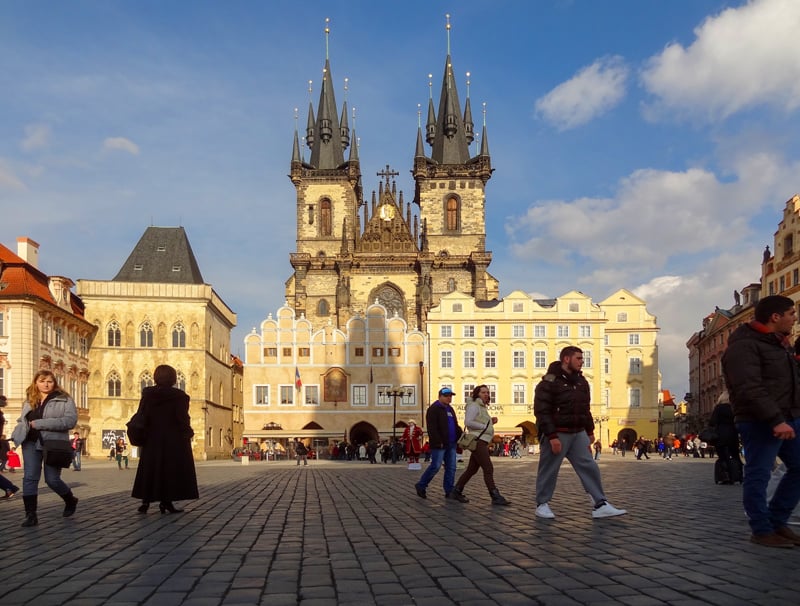
Since Prague has been untouched by war, it contains a wealth of stunning, original and authentic European-style architecture. You’ll see nothing like it elsewhere else in Europe.
Prague is a city where you can just walk about and inhale the ambiance. But it’s this very overabundance of beauty that’s problematic. There are so many remarkable buildings it’s easy to overlook things that would be a standout in any other city.
First and foremost, visit Prague Castle, regally situated on a hilltop above the Vltava River (reached via Tram #22). But it’s not just a castle; it’s an entire complex that includes, among other sites, the beautiful St. Vitus Cathedral. There’s also a daily changing of the guard.
Most Popular Hotels in Prague
While on the castle side of the river also stroll around Malá Strana, the city’s “Little Quarter”. It was once home to craftspeople and merchants who served the royal court. Then walk across the 600-year-old Charles Bridge, lined with Baroque statues, en route to the famous medieval Astronomical Clock.
Close nearby is Old Town Square, the heart and soul of Prague. Adjacent to it is the old Jewish Ghetto dating from the 12th century. If time permits, walk a few more blocks and visit the Municipal House. It’s home to the beautiful Smetana Concert Hall, as well as two popular restaurants: one Old-World, the other Art-Nouveau.
Best City of Eastern Europe for Old-World Style: Budapest
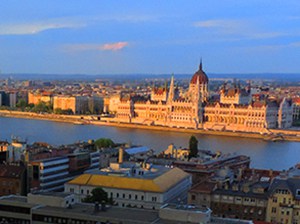
It’s a beautiful place, which reached its zenith in the Renaissance under “Good King” Mátyás before being occupied by Ottomans. Later camer the Hapsburgs, who created so many of its imposing buildings and palaces. Some rate it as the finest of the Hapsburg triumvirate of Vienna, Prague, and Budapest.
Modern Budapest oozes European Old-World grace. That’s not to say it doesn’t have its quirky side. You’ll see that side in its popular “ruin” pubs, popular bars in derelict buildings.
Most Popular Hotels in Budapest
Set out early in the morning for the famous view of the city, Parliament and the Danube from Fishermen’s Bastion. (In case you slept in, it’s also a great view at sunset). Then pay a visit to the adjacent historic Mátyás Church followed by a stroll around old Buda.
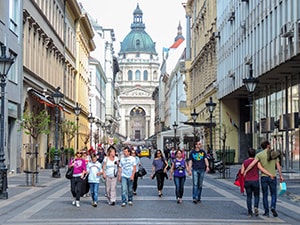
Across the city on the Pest side, take a taxi to Heroes’ Square and then walk back down Andrassy Avenue. Stop in the beautiful Bookstore Café in the Paris Department Store, then visit beautiful St. Stephen’s Basilica. Nearby is the Dohány Street Synagogue, the second largest in the world.
When you reach the Danube, don’t miss the Shoe Memorial on its bank just north of the Széchenyi Chain Bridge. A tribute to Jews killed on that spot by Fascists in World War II, which is quite poignant. The Royal Palace (home to the Budapest History Museum and the Hungarian National Gallery) is also interesting.
Also visit, if you can, the Great Market Hall and any of the old Turkish baths. The ornate Gellért Baths on the Buda side are known for their beauty; the Széchenyi Baths near Heroes’ Square is the city’s most popular.
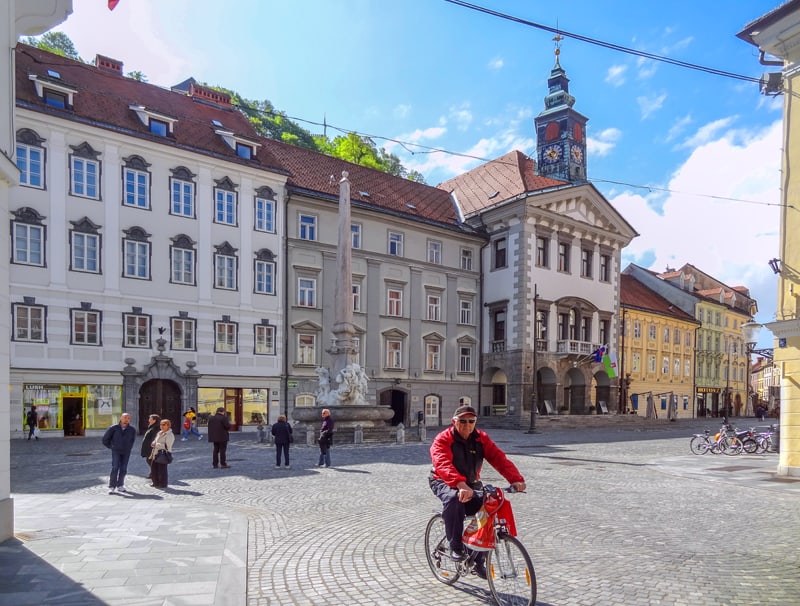
Best City of Eastern Europe for Old-World Architecture: Ljubljana
Ljubljana, born centuries ago as a Roman trading center, is an amazingly beautiful and clean city. Walk about its Old Town and you’ll find yourself transported back centuries in the warren of cobblestone streets and alleyways.
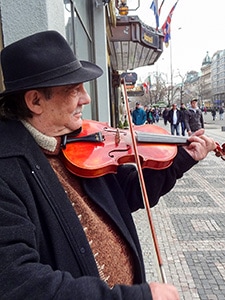
But even in the “newer” part of the city you’ll still find car-less streets and pedestrian thoroughfares. The more prominent are filled with street musicians, people shopping or sitting in outdoor cafés. It’s a peaceful, clean and mesmerizing European city with an atmosphere markedly different from that of many other European capitals.
Most Popular Hotels in Ljubljana
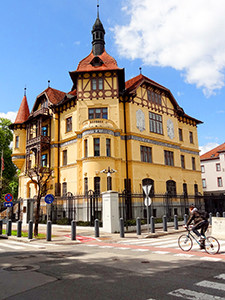
Its architecture – ranging from Baroque to Art Nouveau to modern – is just as mesmerizing. In fact, it makes Ljubljana one of the best cities of Eastern European cities for beautiful architecture. And rather than divide the New and Old sections of the city, the river that bisects it unites the two. You’ll find the left bank just as interesting as the right.
Don’t miss Prešeren Square, and the Art Nouveau architecture scattered all over the city (especially along Miklošičeva Street, near Prešeren). The Triple Bridge by Prešeren will lead you to the Old Town near the Market Colonnade.
Not far beyond you can take the funicular up to the fairytale-looking Ljubljana Castle. It’s right in the center of the city and also reachable via a road and hiking path.
Spend a little while in the National Gallery before strolling about town aimlessly wandering up myriad streets and alleyways. In fact, strolling aimlessly is the best way to appreciate the city.
Best City of Eastern Europe for Inexpensive 5-Star Hotels: Bucharest
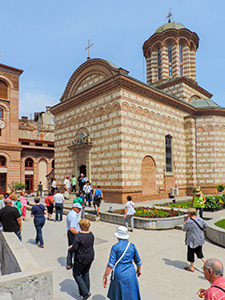
Bucharest has a strong Turkish flavor, the result of being conquered by the Ottomans in the late 16th century. For years it was nicknamed “Little Paris” due to its lavish buildings and French-style architecture.
Today, however, it’s better known as one of the best cities in Eastern Europe with affordable 5-star hotels. In fact, a visit here costs only about one-quarter to one-third of what you’d spend on a visit to Paris.
Romania is still recovering from the damage inflicted on it by the country’s much-hated former President, the megalomaniac Nicolae Ceausescu. In Bucharest, he demolished 80% of the old historic section of the city. In its place he built the huge parliament building, the second-largest government building in the world.
Most Popular Hotels in Bucharest
What’s left of the Old Town is the center of nightlife in Bucharest. Just be careful walking about the area since the streets aren’t perfectly paved. There’s also a moderate amount of construction ongoing so you’ll find one street fairly dirty, the next super clean.
You may also enjoy: River Cruising Through Eastern Europe / Best Cities in Croatia / Lipica Stud Farm and Its Beautiful White Lipizzaners in Slovenia
See the Old Court Church as well as the Patriarchal Cathedral in Bucharest. Also of interest is the Royal Palace (encompassing the National Art Museum) and the interesting Village Museum in Herāstrāu Park. Among other things, the park contains replicas of Romania houses.
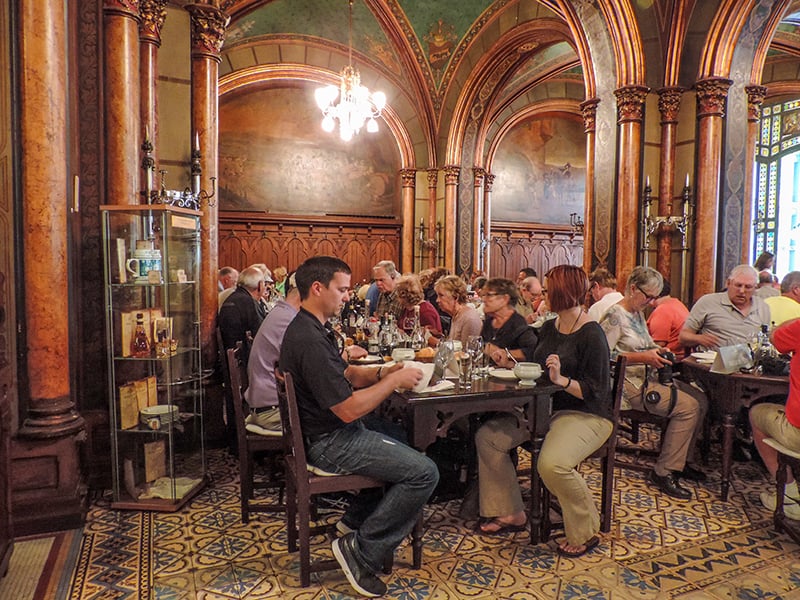
Stop for lunch or dinner at the restaurant Caru Cu Bere in the Old Town. It’s one of the best-maintained traditional restaurants in the city.
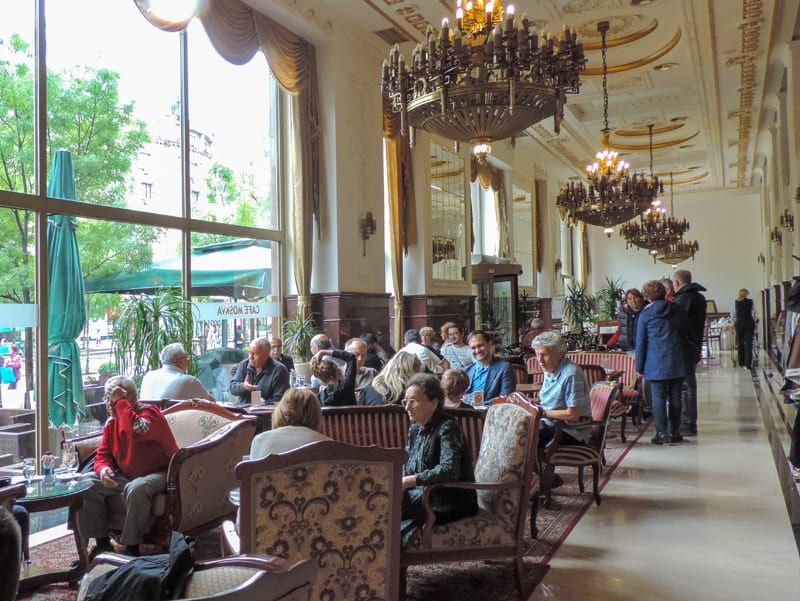
Best City of Eastern Europe for Clubs and Coffee Houses: Belgrade
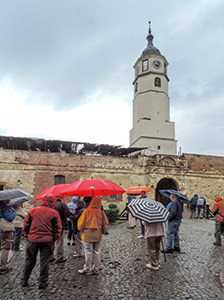
One of the oldest European cities, Belgrade was very gray and dour during the Cold War days. Today it is a “happening” place. It attracts club-goers from all over Europe to its pulsing clubs and floating pub-barges along its waterfront.
Despite its modern vibe Belgrade remains a wonderful patchwork of architectural styles. Blocks of Soviet-era apartment buildings contrast with Art Nouveau masterpieces and remnants of the city’s former Hapsburg and Ottoman rulers.
Most Popular Hotels in Belgrade
You find Serbs visiting upscale shops and stylish coffee houses on attractive pedestrian boulevards. Later you find them food-shopping in a centuries-old outdoor market. The markets are still very much in favor, even though only a few blocks from a large modern mall.
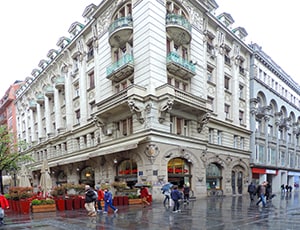
It’s also a city in transition with some growing pains. Some streetcars are modern, other 60 years old.
Be sure to visit the historic Kalemegdan Citadel, the old fortress that is now a lovely urban park. It was quite interesting since we took a guided tour. Otherwise, we would just have been walking through a park without having a greater understanding of its historical importance.
See also the Church of Saint Sava, the largest Orthodox church in the Balkans. When I visited it was still, and slowly, nearing completion.
Great article on these lovely Eastern European cities. I hope to go inside the castle in Prague next time. The other cities you describe sound worth seeing. Thanks!
Thank you Carla. Yes, Prague’s Castle is quite interesting.
I am glad to see Ljubljana on the list – this is one of my favorite cities in Europe. I think, though, the reason I love it so much is that it’s largely untouched by western tourists and I feel like I have found something special.
Prague 20 years ago was great, but last time I went, before the pandemic, it was just packed, and that was in the off-season. It might be fine now with the pandemic.
Romania, Hungary, Estonia, Lithuania and Latvia are on my bucket lists.
Another place I would add is Opatija in Croatia, for those who love small coastal towns
Thank you William for your comment. I know exactly what you mean.
Jim
Great article. The Baltics–Estonia, Latvia, and Lithuania–are fabulous destinations, too.
Thank you Jimmie.