
Last Updated on February 26, 2026
Estimated reading time: 10 minutes
Updated for 2024/ 2025
By Jim Ferri
As travelers, we all recognize how important it is to be able to communicate in a foreign country. It can be difficult if you can’t speak the local language or if those in the host country don’t speak yours. In fact, it can ruin your vacation.
The problem is exacerbated when traveling through several countries where different languages are spoken. Eastern Europe is an excellent example of where the bouillabaisse of languages can leave your head spinning.
An Eastern Europe river cruise, with numerous guides speaking the language of the day, is a perfect solution.
Then, you move effortlessly through several countries and languages, all in the comfort of your stateroom. That is why I accepted Royal Viking Cruises’ offer when they invited me to sample their Passage to Eastern Europe package, a cruise on the Danube from Budapest to Bucharest.
An Eastern Europe river cruise, with numerous guides speaking the language of the day, is a perfect solution.
Then, you move effortlessly through several countries and languages, all in the comfort of your stateroom. That is why I accepted Royal Viking Cruises’ offer when they invited me to sample their Passage to Eastern Europe package, a cruise on the Danube from Budapest to Bucharest.
Table of contents
Passage to Eastern Europe, A Five-Country River Cruise
Passage to Eastern Europe, the name of this river cruise, is an 11-day (including transit), five-country cruise. Seven nights are aboard the 190-passenger Viking Embla. The ship stops at six small ports along the way, with passengers taking a bus inland to see some sights away from the river.
Viking uses upscale hotels for the land portion of the cruise. We spent two nights at the Hilton in Budapest and one at the InterContinental in Bucharest.
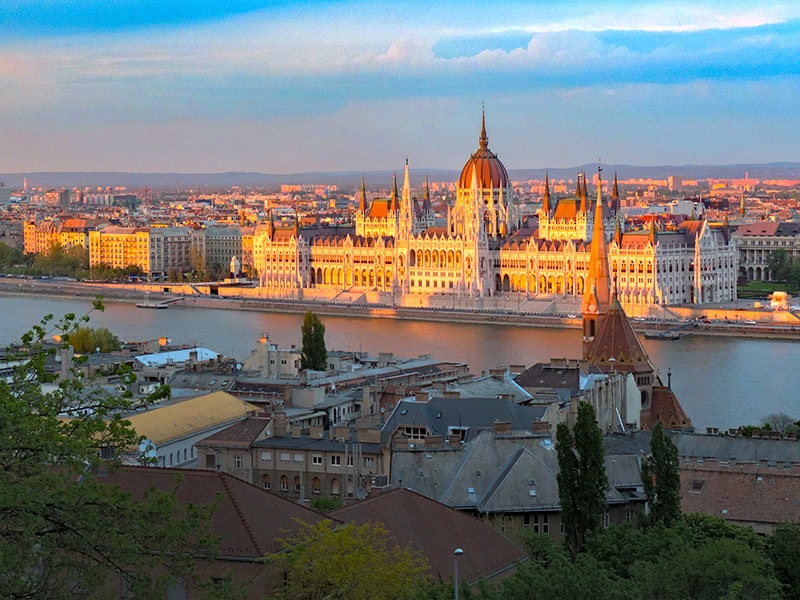
After arriving in Budapest, passengers spend a day sightseeing on a bus tour. They then have a half-day to wander on their own before boarding the ship.
After two nights at the Hilton, passengers take a bus to the Embla, one of Viking Cruises‘ “Longships.” Aboard, they enjoy a nice cruise down the Danube, stopping in river towns. In addition, passengers are bused to other towns farther inland. The tour then ends in Bucharest, Romania.
My medium-priced cabin on this Eastern Europe river cruise is quite comfortable. It has good lighting, ample 110 and 220 outlets, a decent-sized bathroom, and an outdoor balcony.
There are also plenty of movies, CNN, BBC, and other networks to view on our large-screen TV. TV reception and Wi-Fi were good all along the river, with only a few interruptions.
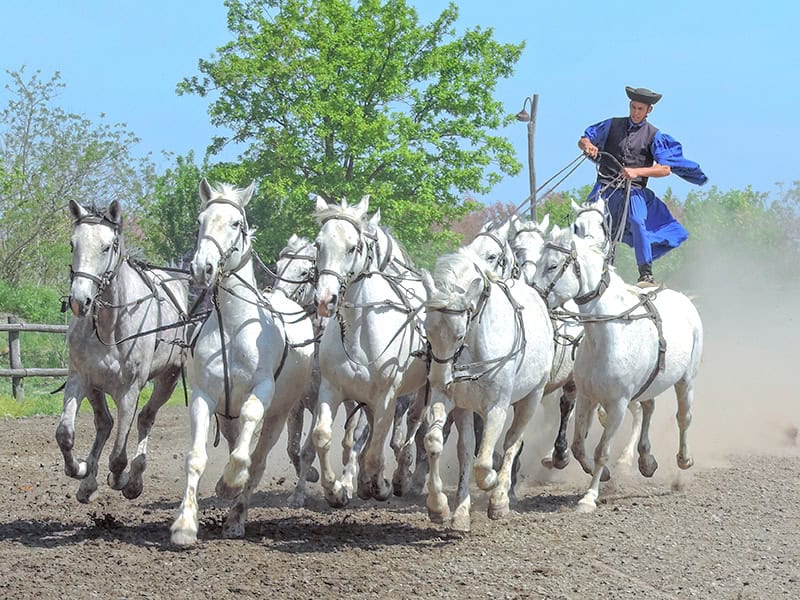
Horsemen of the Puszta
We board the Embla after two nights in Budapest and a city tour. Conveniently, boarding takes place right in the center of the city.
The next morning, following an informal Welcome Reception and dinner on our first night onboard, we awoke at a small dock in the Hungarian countryside.
Following a good breakfast—in fact, all the meals were quite good—buses took us to the small Hungarian town of Kalocsa. We had a walking tour there before continuing to the Bakodpuszta Equestrian Center, which turned out to be the more interesting venue of the day.
At the center, we watched performances by the Hungarian horsemen of the Puszta. These cowboys are the descendants of the Magyar warriors who emigrated to Hungary centuries earlier.
It was a great hit and included one act that likely was the last thing we expected to see in Hungary: a cowboy standing on the haunches of 10 white stallions galloping about a corral at break-neck speed.
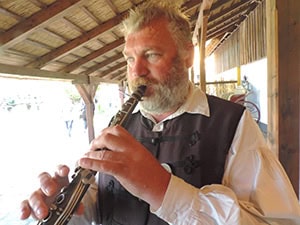
The performance was accompanied by samplings of Hungarian brandy and other peasant foods as we were serenaded by a clarinetist. As expected, there was also the opportunity to buy Hungarian embroidery and other items in the center’s little market.
Rediscovering Belgrade
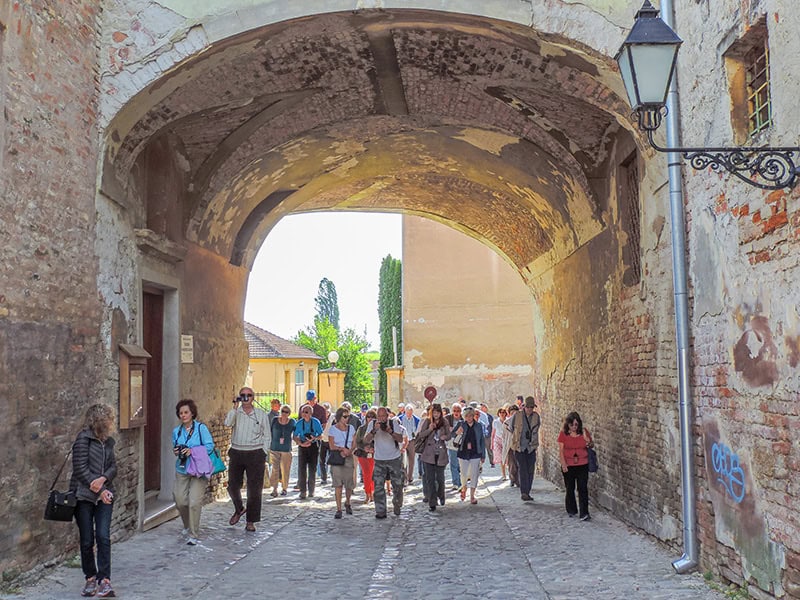
Vukovar was only our base for meeting our buses; however, Our destination was actually the town of Osijek, the 4th-largest in Croatia. Once there, we walked along 18th-century cobbled streets lined with the best-preserved Baroque buildings in the country.
While I enjoyed our tour of Osijek, I was stunned the next day. It was when, on this Eastern Europe river cruise, we visited Belgrade, the capital of Serbia. I had been to Belgrade many years ago and had avoided it ever since. The reason was because I remembered it as a drab, dour-looking city.
But now, I find it amazing how the city has changed, transforming itself from boring to beautiful. Despite the rain, I became more smitten with the place every place we went.
Following lunch back on the Embla, I took an optional tour to the Kovacica Art Colony in a small town further north.
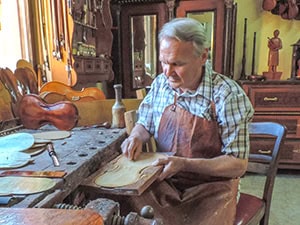
I know it was due to my high expectations, but I found the art gallery of naïve paintings disappointing. On the other hand, I found our later visit to the home/workshop of a violin maker fascinating. It was wonderful to watch an Old-World craftsman ply his trade and answer our many questions.
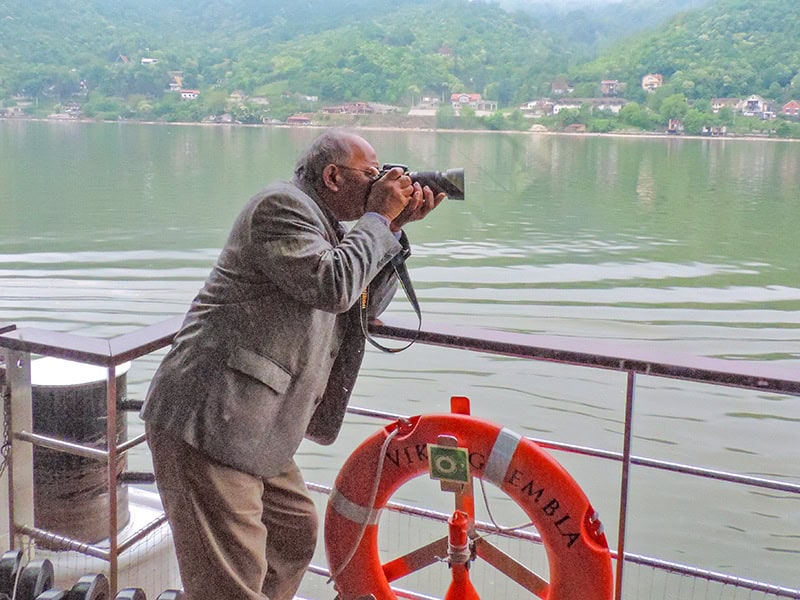
River Cruising Through the Iron Gates of Eastern Europe
It was comfortable aboard the Elba, but I rarely took advantage of time to relax on deck since we always explored towns during the day and sailed at night on this Eastern European river cruise.
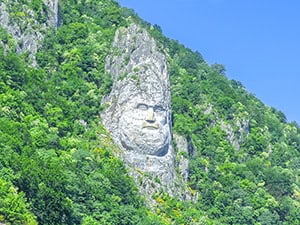
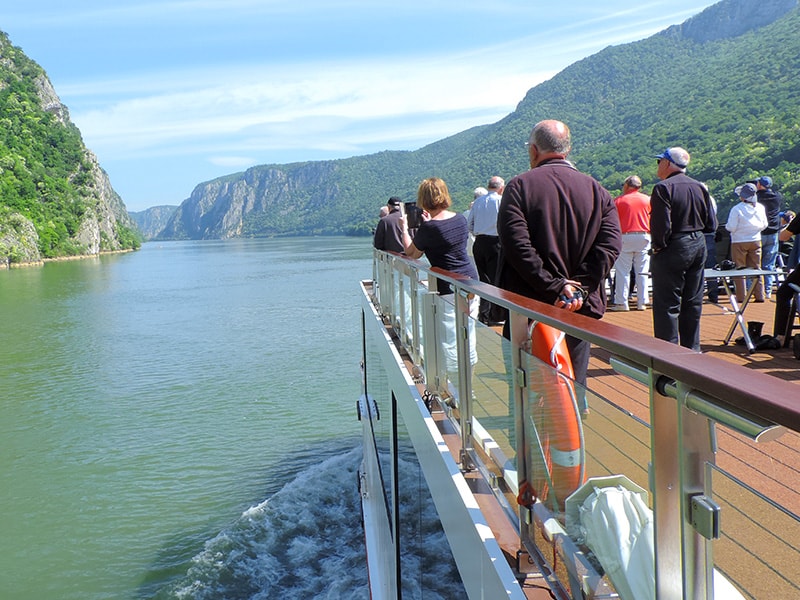
That was rectified on Sunday as we cruised through the Iron Gates, the narrowest and, to some, the prettiest section of the Danube.
It’s a lovely section of the river flanked by tall limestone cliffs. The 150-yard-wide channel cuts through the Carpathian and Balkan mountains. One of the most famous sights on it is the massive carving of the rock of the ancient Romanian tribal chief Decebal, which was completed in 2004.
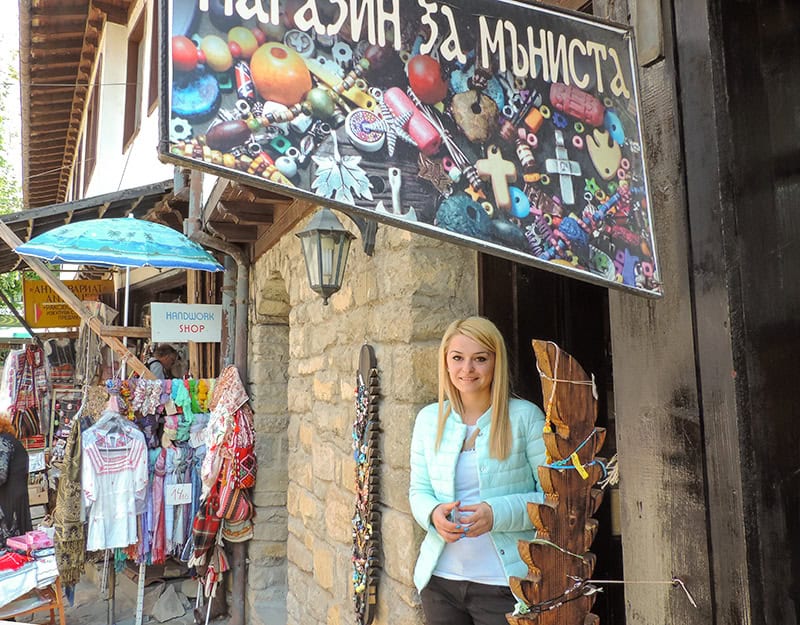
Wonderful Veliko Tarnovo and Arbanassi
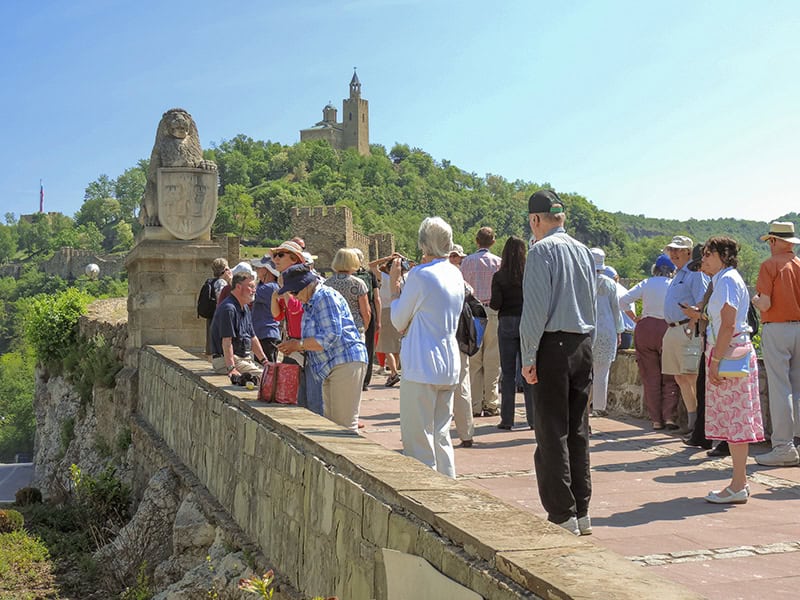
On our river cruise through Eastern Europe the following day, we docked in the Bulgarian port of Vidin to visit the unique Belogradchik Fortress. This stronghold was originally constructed by the Romans and enhanced by successive empires. We climbed the rocks around it for some spectacular views of the surrounding countryside.
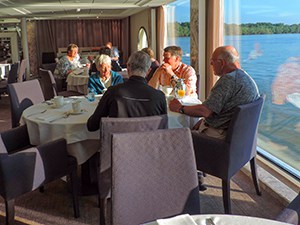
Later that day, we visited Veliko Tarnovo, Bulgaria’s former capital, and the town of Arbanassi and were surprised by both.
Let loose to wander on our own for an hour in Veliko Tarnovo, I walked up Rakovski Street, an incredible artisan’s street lined with art shops and galleries and the occasional workshop of a potter or coppersmith. The cobblestone street curved along the hillside, flanked by century-old buildings filled with small shops and galleries on both sides.
It was amazingly photographic and colorful, and even from an architectural perspective, quite interesting. Coming out of one gallery, I saw contrails of two jets flying high overhead, and I felt as if I was in another world, transported back in time.
Arbanassi, Then On to Bucharest
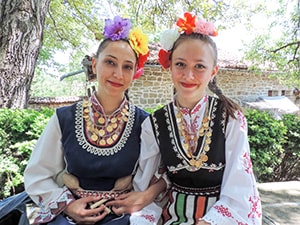
Later, we drove to Arbanassi, just a few miles away, and had a delicious lunch with quite a good Bulgarian Cabernet Sauvignon. Throughout the lunch, we were entertained by local musicians and dancers. After the restaurant, we walked over to the nearby fresco-adorned Church of the Nativity, another over-the-top cultural icon.
Our river cruise in Eastern Europe ended in Bucharest at another ecclesiastical icon: the lively and crowded Caru’ cu Bere, a restaurant in the old section of Bucharest originally built to resemble a church.
I never discovered whether that was just local lore, but the inside of the place was amazing, and the food was quite good.
Unfortunately, Bucharest left a lot to be desired. Although Viking took very good care of us, the old city was bland and needed more exciting sites of interest to Westerners. I remedied the situation by renting a car and heading for the country’s interior for a few days. There, I found a fascinating area of Romania still living in medieval Europe.
You may also enjoy: Day-Tours in 5 of the Best Eastern European Cities / 10 Things to do in Budapest, You Don’t Want to Miss / A Weekend in Prague
If You Go:
Viking River Cruises
5700 Canoga Avenue
Woodland Hills, CA 91367
Tel: (877) 668-4546
http://www.vikingrivercruises.com
WE done at least 5 river cruises and absolutely love them!! Including Ruissa, China, Egypt, Seine, Danube, Rhine.
In February we did the Mekong River from Phnom Penh to Vietnam!!!